

Pulse surveys only matter when they help leaders see change early and respond before morale, trust, or execution slips. Purpose of Pulse Surveys: Driving Organizational Change matters because teams need faster feedback loops that translate employee sentiment into visible action.
At LEAD.bot, the best pulse programs stay brief, consistent, and tied to decisions managers can actually make. Used well, they give organizations a live signal on what is improving, what is drifting, and where intervention will have the most impact.
What Are Pulse Surveys?
LEAD’s Definition: Short, High-Frequency Check-Ins
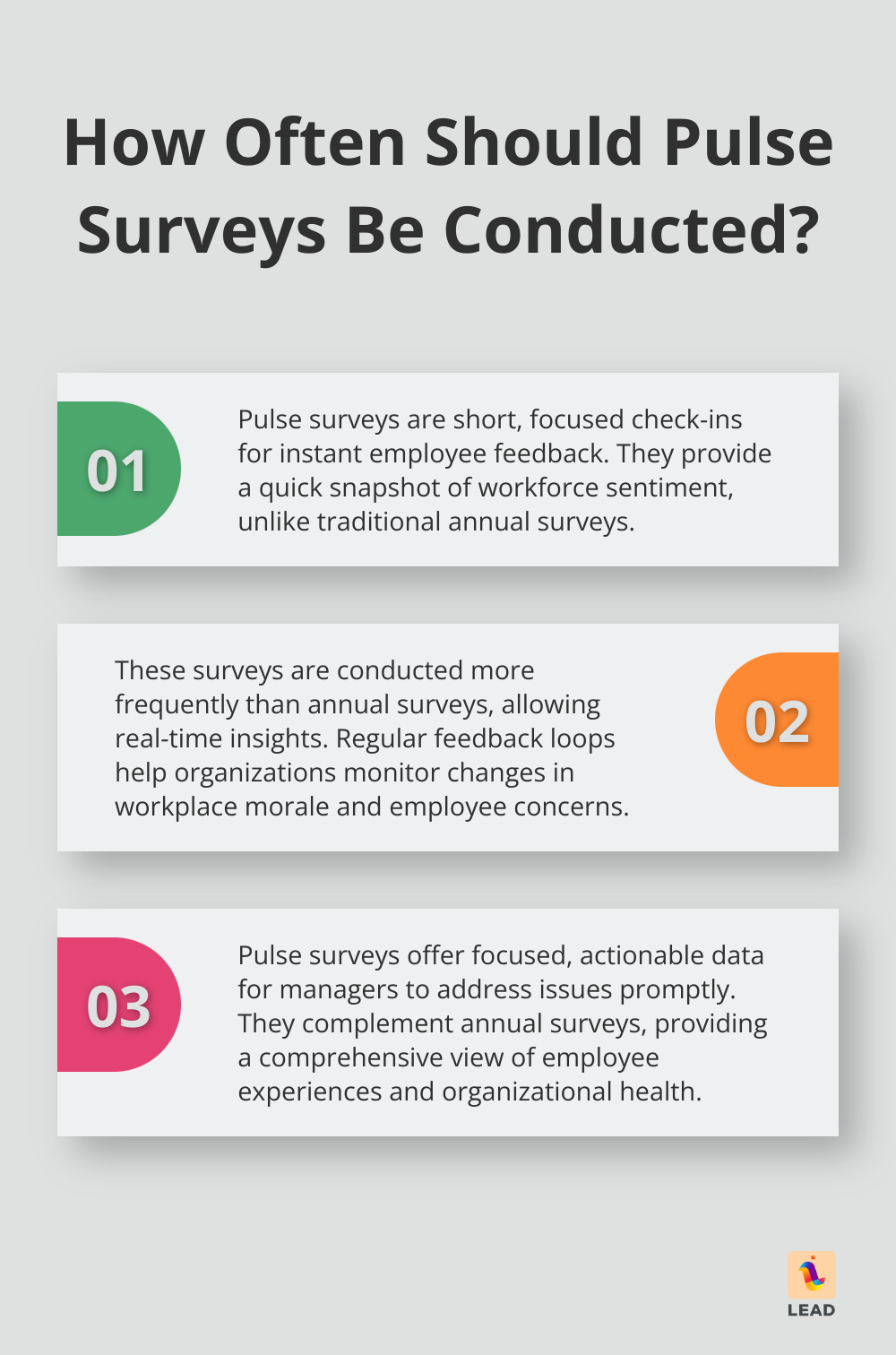
At LEAD, pulse surveys are short, high-frequency check-ins designed to capture employee sentiment in real time. They are intentionally brief, easy to answer, and tied to decisions managers can actually make quickly.
What Pulse Surveys Are Not
Some vendors stretch the term pulse survey to cover long-form surveys that take 20 to 30 minutes to complete. That is not the standard LEAD uses. A survey that long is a traditional or periodic survey, even if it is sent more often. Pulse surveys should feel lightweight enough to run regularly without creating survey fatigue.
Why Brevity Matters
The value of a pulse survey comes from speed and repeatability. Short surveys make it easier to track shifts in trust, morale, workload, and manager effectiveness before problems harden. They also improve response rates because employees can answer in a minute or two instead of blocking off significant time.
Focused and Actionable by Design
Strong pulse programs stay focused on a small set of questions around one immediate theme, such as onboarding, change readiness, manager support, or team communication. That focus gives leaders a clearer signal and makes it easier to connect results to visible follow-up actions.
Best Used as Part of a Broader Feedback System
Pulse surveys complement deeper annual or semiannual surveys; they do not replace them. The long-form survey is where organizations explore broad themes in depth. The pulse survey is where they check the system regularly, spot movement early, and respond while the issue is still manageable.
Pulse surveys help organizations move from vague sentiment to timely action. When kept short and frequent, they become a practical management tool rather than another burdensome survey event.
How Pulse Surveys Drive Real Change
Spotting Issues Early
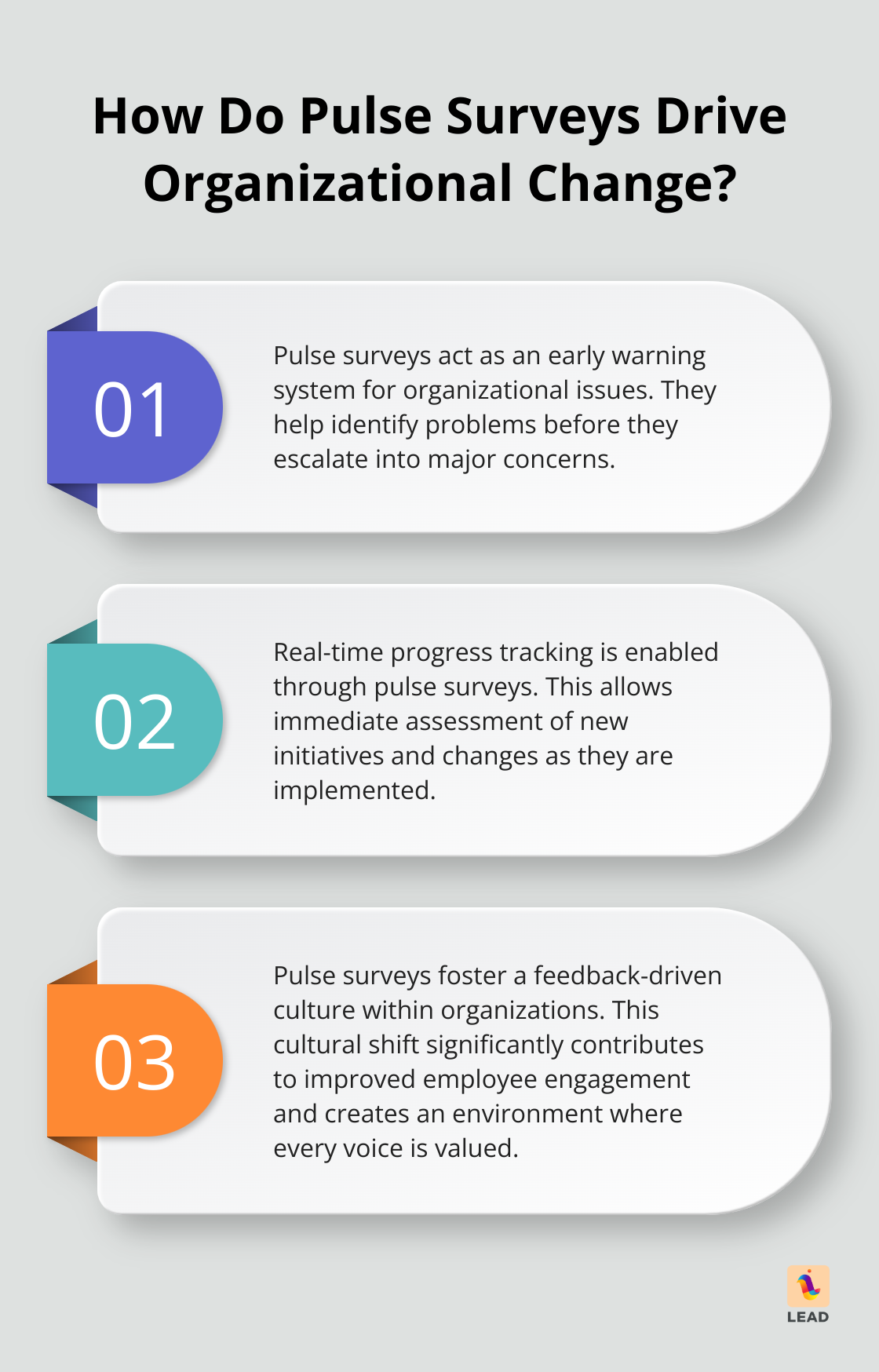
Picture this-pulse surveys as your organization’s secret early warning system. These nifty tools help sniff out problems when they’re still just tiny sparks, way before they turn into raging infernos. Pulse surveys have started to gain traction in the employee feedback space. This proactive move? It keeps you busy preventing chaos – not firefighting.
Real-Time Progress Tracking
Got a new initiative on deck? Curious if it’s hitting the mark? Pulse surveys have your back. They let you gauge if those changes are landing successfully… right as they’re happening. Waiting months for feedback? No thanks. Real-time insights – that’s the name of the game.
Creating a Feedback-Driven Culture
Pulse surveys do more than just gather numbers-they morph the culture into one where feedback is the reigning king. That’s culture shift, folks, and it’s a big deal for employee engagement. Boosting employee engagement means getting to the bottom of what truly drives it, asking the right questions, and brainstorming team activities. In a nutshell, it’s about crafting a place where every single voice matters, and everyone feels heard.
Empowering Data-Driven Decisions
Swipe left on gut feelings – pulse surveys give you the cold, hard data. And this isn’t just powerful – it’s empowering. Leaders get to make decisions grounded in what employees actually feel. The study didn’t zero in on pulse surveys specifically, but it sure highlighted the gold mine that is data-driven decision-making – and pulse surveys? They’re enabling this in spades.
Enhancing Organizational Agility
Pulse surveys, the underrated MVPs for staying nimble. Remember when COVID-19 threw the world a curveball? Pulse surveys? They had companies pivoting like seasoned pros. Swift insights, rapid changes – adapting to new challenges is their jam.
Beyond mere data collection – pulse surveys are transformative. They’ve got organizations on a path to continuous improvement and adaptability. So, as we stride forward, let’s dive into how to wield these potent tools effectively.
How to Nail Your Pulse Survey Strategy
Set the Right Frequency
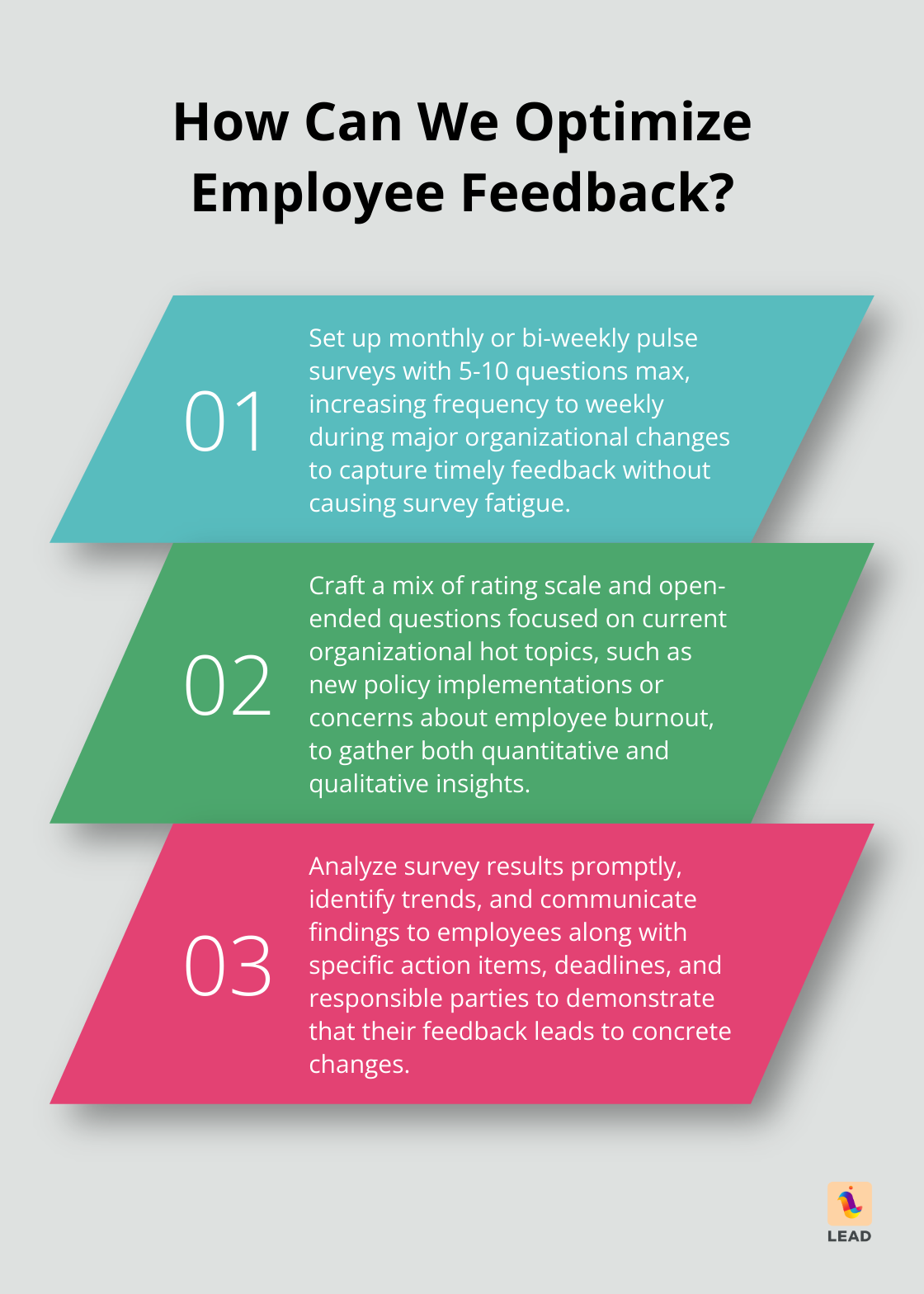
Okay folks… let’s figure out how often we’re pinging these pulse surveys. For most outfits, sending ’em out monthly or every couple of weeks feels right. But if the ship’s rocking with big changes, you might need to ramp up to weekly. It’s a tightrope walk – keep tabs on things without drowning in a sea of survey fatigue.
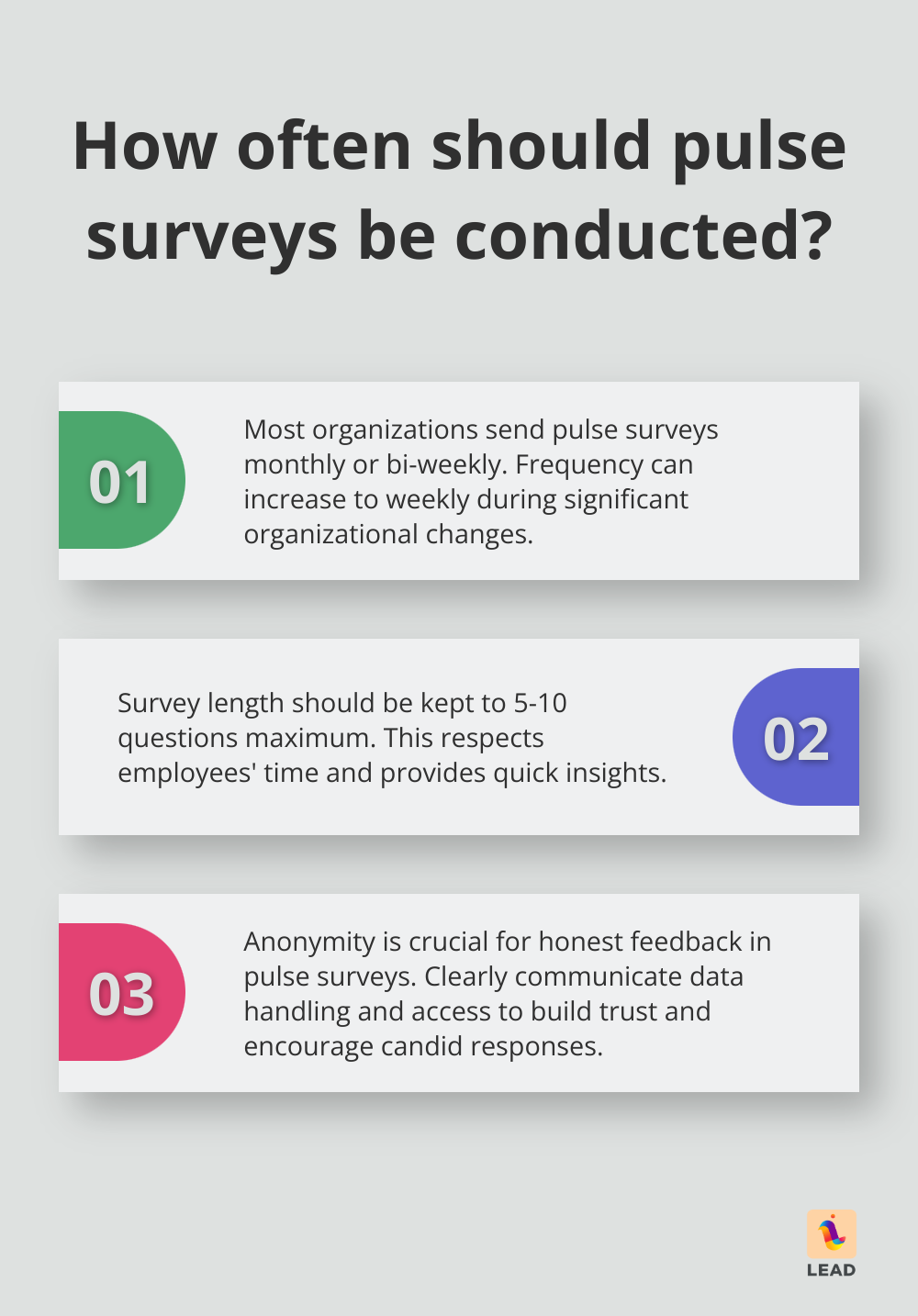
Keep it snappy, will ya? Aim for 5-10 questions, tops. We’re respecting time here – yours and the employees’. You want those fast insights – not an epic novel.
Craft Effective Questions
Here’s the deal – your questions? They’re the heart and soul of this whole pulse survey jazz. Zero in on what’s hot for your organization NOW. Rolling out a new policy? Probe it. Worried about burnout? Toss in something about work-life balance.
Mix it up with your question types. Yeah, go for rating scales for those sweet, sweet numbers. But don’t leave out open-ended questions. That’s where the gold’s at. Just don’t go overboard – too many, and folks get overwhelmed.
Ensure Anonymity
Guarantee anonymity to get honest feedback. Employees gotta feel safe spilling their guts without fearing the axe. (This? Yeah, it’s a deal-breaker for making these surveys work.)
Be crystal clear on how you’re guarding anonymity. Lay out your data handling and who gets to peek at the results. This transparency? It builds trust and invites more candid feedback.
Act on Insights
Collecting data – just the opening act. The real show? That’s when you dig into the results and actually do something. Spot trends over time and watch out for sudden mood swings. Numbers are nice… but don’t sleep on those comments in open-ended replies.
Loop in your team with what you’ve found. Be upfront – here’s what we learned, and more importantly, here’s what’s next. (Nothing tanks survey participation like thinking it’s all gonna be for naught.)
Set some action items from the insights you’ve harvested. Assign tasks, slap on some deadlines. And down the line? Future pulse surveys will be your scorecard to see how these actions stack up.
Final Thoughts
Pulse surveys – the secret sauce of organizational mojo. They serve up real-time intel and sprinkle a little magic dust on a feedback-driven culture. What do they really boil down to? Empowering companies to tackle issues head-on and crafting a workplace where employees (yes, actual people) feel, you know, valued. Here’s the kicker: to pull it off, you need to ask the right questions, guarantee that cloak of anonymity, and jump on those insights like your career depends on it.
Now, let’s talk about the turbo boost – LEAD.bot. This bad boy integrates seamlessly with all those fancy communication platforms. Think of it as the Swiss Army knife for pulse surveys – making the whole shebang simpler, crunching the numbers, and turning insights into actions faster than you can say “corporate synergy.” Plus, it comes armed with extra features to turbocharge employee engagement and team bonding.
And let’s debunk a myth – pulse surveys aren’t just a fleeting gimmick. Nope, they’re the real deal, a powerhouse for good vibes in the workplace. Picture this: transforming company culture, juicing up employee satisfaction, and boosting business outcomes. (And oh, the million-dollar question: Are pulse surveys really anonymous? Yes, when you dot the i’s and cross the t’s, anonymity is legit.)
