
Employee Matching App for Teams: What to Look For
If you want more than random introductions, an employee matching app should help your team connect the right people for onboarding, mentorship, knowledge sharing, and cross-team trust. The best option for Microsoft Teams makes matching feel purposeful, keeps admin work low, and gives you a repeatable way to build stronger internal relationships.
That matters because most teams do not struggle with willingness. They struggle with finding the right people quickly, starting useful conversations, and keeping a connection program alive after the initial launch. A strong employee matching app closes that gap without turning your People Ops team into full-time coordinators.
What an employee matching app should actually solve
It is easy to evaluate an employee matching app by surface-level features: calendar sync, reminders, and whether it works inside Teams. Those things matter, but they are not the real test. The real question is whether the app helps your employees build relationships that become useful over time.
For most organizations, that means helping people answer a few practical questions fast. Who should a new hire meet first? Which peer can unblock a project? Where can a manager connect people across functions before silos harden? If your program cannot support those moments, you are not buying a connection system. You are buying a scheduling layer.
That is where LEAD.bot approaches the problem differently. Instead of treating every introduction as interchangeable, it helps you structure programs around the outcomes you actually care about, such as stronger onboarding, mentorship, employee engagement, and better knowledge sharing.
Random matching vs purposeful matching
Random pairings can work as a lightweight way to spark serendipity, especially in large or distributed teams. But random matching alone usually produces mixed results. Some conversations are great. Others feel forced, irrelevant, or easy to skip the next time around.
A better employee matching app gives you more control over intent. You may want one program for onboarding buddies, another for mentorship, and another for cross-team introductions between groups that rarely interact. Those are different goals, so they should not rely on the exact same matching logic.
Purposeful matching also improves employee confidence. When people understand why they were matched, they are more likely to show up prepared, have a better conversation, and stay engaged with the program. If your team uses virtual coffee chat programs in Slack and Teams, that difference becomes obvious very quickly. Structure improves follow-through.

The workflows that matter most in Microsoft Teams
The strongest employee matching app for Teams supports more than one recurring use case. At minimum, you should be able to run distinct workflows for:
- New hire onboarding, so new employees meet helpful peers early instead of navigating your organization by trial and error.
- Mentorship, so employees can build learning relationships that support growth and retention.
- Cross-team introductions, so knowledge moves more easily between functions, locations, and levels.
If the app only supports a generic coffee chat program, your team may outgrow it fast. Microsoft Teams environments often need more structure because connection programs must fit into existing communication habits, busy calendars, and enterprise approval processes.
Look for a tool that also fits your broader stack. Native setup matters, but so does how the app supports your workflows over time. LEAD offers integrations with Teams and related workflow tools, which makes it easier to launch programs without creating another disconnected admin process.
How to evaluate admin overhead, reporting, and participation
An employee matching app should reduce coordination work, not quietly shift it onto HR or People Ops. Before you choose a tool, ask what the program looks like after month two, not week one.
Can you automate reminders and recurring matches? Can you segment by use case, location, function, or cohort? Can you see whether employees are participating and whether the program is reaching the right mix of people? Those details shape whether a program becomes part of team culture or fades into another low-adoption initiative.
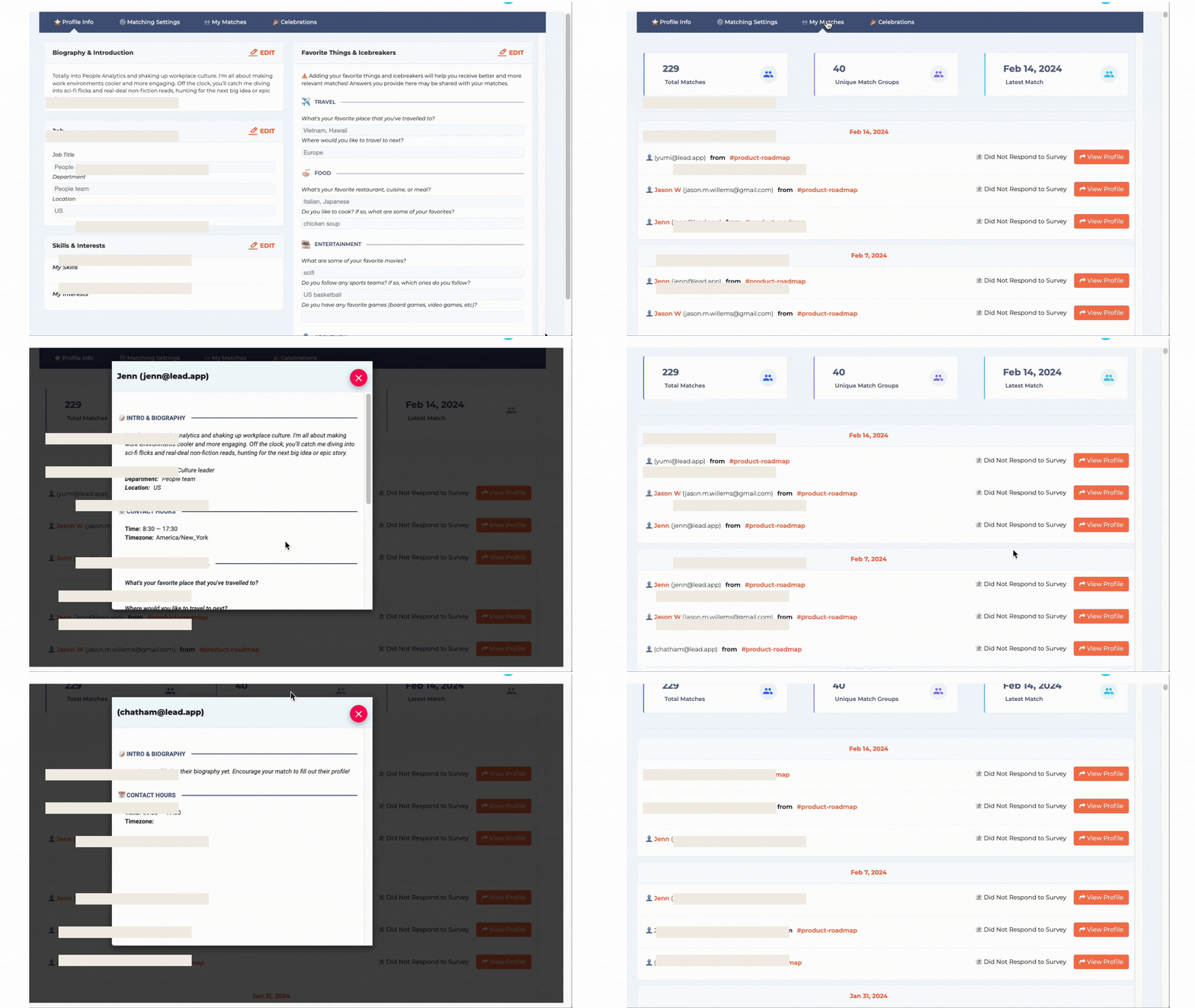
Reporting matters here, but not just for vanity metrics. You want enough insight to know if new hires are connecting, if mentorship programs are broadening access, and if cross-team matching is creating healthier collaboration patterns. A tool like LEAD’s knowledge network insight can help teams move beyond activity counts toward a clearer picture of how internal relationships are forming.
A simple checklist for choosing the right tool
When you compare options, use this checklist:
- Does this employee matching app work natively inside Microsoft Teams?
- Can you run different programs for onboarding, mentorship, and cross-team introductions?
- Does the matching feel purposeful, not purely random?
- Can a lean People Ops team run it without heavy manual coordination?
- Do you get useful participation and relationship insights, not just meeting counts?
- Will employees understand why the match matters to them?
If most answers are yes, you are likely evaluating a tool that can actually improve internal connection quality. If not, you may end up with more introductions but not better outcomes.
The best employee matching app is not the one with the longest feature list. It is the one that helps your team create the right relationships at the right moments, with enough structure to scale. If you want to run employee matching inside Teams with better support for onboarding, mentorship, and knowledge sharing, see how LEAD.bot for Microsoft Teams works or explore LEAD pricing to find the right fit.